
Dem
47

GOP
53

The New World screwworm (cochliomyia hominivorax) isn't a worm at all. It is a fly, not so different from the common housefly, really. It is called a screwworm because its larvae look like screws. Here an adult screwworm poses for a portrait:
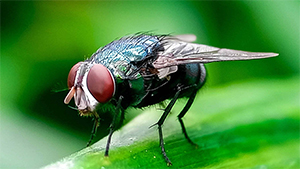
Screwworms are common in Mexico but they are marching (all right, flying) north and have now shown up in Texas. The female flies have the habit of laying their eggs in the wounds of domestic cattle. When the eggs become larvae, they dig deeper and feast on the living flesh below. Left untreated, the larvae can kill a cow. Maybe you think of this as David vs. Goliath, but Texas cattle ranchers don't think like this at all.
If the infestation spreads, cattle ranchers may be forced to kill off large parts of their herds, which will raise beef prices. Voters will notice this. Maybe they will blame Secretary of Agriculture Brooke Rollins, but probably, outside of agricultural circles, most people have never heard of her. They will blame Donald Trump.
The traditional way to treat a screwworm infestation is to raise millions of screwworms in a factory setting and then to expose the flies to a carefully calibrated dose of radiation to render them sterile. A female screwworm mates only once in her life, and if her boyfriend is a dud, no baby screwworms. By dropping millions of sterile males over an infected area from airplanes, the infestation can be controlled. But this requires acting fast and staying ahead of the spread.
Where, pray tell, can you get sterile screwworms? Amazon doesn't carry them and neither does Walmart. It turns out there is one screwworm factory in all of North America and it has X-ray machines to zap the boys. It is in Panama and can produce 100 million units per week. Rollins said she needs 400-500 million per week. A new facility in Mexico will add another 100 million per week to the production capacity, but Mexico needs them as well and might use its production domestically. A facility under construction in Texas is expected to be up and flying by November 2027. Gov. Greg Abbott (R-TX) is doing his best to get that one opened by May 2027, but that may or may not succeed. After all, the owners of the facility are already highly motivated to start production as fast as they can, since finding customers won't be a problem. The Texas facility hopes to produce 300 million products per week. If the infestation is still spreading by then, the 100 million from Panama and the 300 million from Texas may not be enough.
Texas Commissioner of Agriculture Sid Miller said: "The whole state will be infested in probably 6 months." Miller just lost his reelection primary to Republican challenger Nate Sheets, who wants to try a new (and unproven) bait-and-insecticide technique. But having all hamburgers come with a side of insecticide may not please the MAHA moms who are already unhappy with the administration over Roundup (glyphosate).
No one is optimistic this problem will vanish quickly. Cooper Little, director of the Independent Cattlemen's Association of Texas, said: "So we're going to look at a lower tonnage of beef and higher input costs. Which can keep beef prices on that sharp upward trajectory." GOP strategist Barrett Marson said: "Americans run on beef. We notice the price of steaks and ground beef every time we go to the grocery store."
One thing the administration can do in the short run is import more beef from Argentina and other countries that have excess production, or decide to prioritize exports over domestic sales. But Texas cattle ranchers are not likely to be happy with such an approach and could make their feelings known in November. (V)