
Dem
47

GOP
53

That is the U.S. strategy in Iran. On Saturday, the U.S. bombed Kharg Island, a coral island one-third the size of Manhattan 15 miles off the coast of Iran. The island is where 90% of Iran's oil exports begin. Donald Trump claimed that the oil infrastructure wasn't bombed, but everything on the island is related to exporting oil, so the bombing is sure to hurt oil exports, even if oil tanks weren't hit directly. There won't be any oil exported from the island for a while. That will teach Iran! Here is a photo of the island before the war.
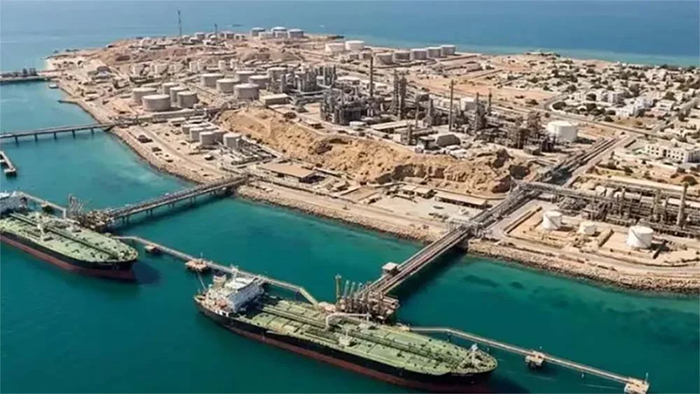
It may also teach Donald Trump a thing or two. Putting Humpty Dumpty together again won't be easy or quick, even after hostilities are over. This means that Iran's oil exports will be cut off for weeks or months, which will certainly hurt the Iranian regime (but not likely enough to cause a revolution, because the army and Revolutionary Guard have all the guns and no hesitation about using them).
But any reduction in world oil supply will push oil prices up and keep them there, likely through the midterms. Trump is probably thinking: "The U.S. does not import any oil from Iran, so we are safe." But oil is largely fungible, and if world oil prices go up, American oil companies will naturally raise their prices to world levels, even if they don't have to. Extra profit is always welcome. If crude prices go up, so will gas prices. Even a somewhat modest per gallon increase will give the Democrats something to talk about, as in: "The Republicans' war of choice resulted in [X] brave American soldiers dying and you paying [Y] more per gallon at the pump, all for nothing. Are prices lower now, the way Trump promised you? No, he lied to you again."
Another issue with "bomb first, think later" is that waging war without congressional approval violates the Constitution, which could be an easy-peasy article of impeachment if the Democrats capture the House in November. Trump is apparently aware of that and would like a declaration to cover his rear end on that, albeit a bit after the fact. He knows the votes for a proper declaration aren't there, but there is a workaround: Ask Congress to appropriate some money for the war and then claim that is an implicit "authorization." In reality, the defense budget is roughly $870 billion, give or take a few billion. There is plenty of room there for Trump to move money around to pay for the war without going to Congress. If the Navy has to wait a couple of years for its tenth or eleventh aircraft carrier or the Air Force doesn't get as many F-35s as it would like, that wouldn't be a disaster. The trouble with that approach is that it wouldn't be an implicit authorization for the war and thus wouldn't eliminate the potential article of impeachment. That is the real reason Trump is about to ask for a supplemental authorization: to dare Democrats to vote against it and most likely get money and the implicit authorization for the war. Better late than never. Such a request puts Democrats on the spot. An "aye" vote "authorizes" the war and a "nay" vote leads to Republicans campaigning on "Democrats don't support the troops."
The main problems for Trump here are: (1) the voters are more sensitive to gas prices than abstract arguments like what powers the Constitution delegates to Congress and (2) the voters have the collective memory of a swarm of fleas. By November, everyone will have forgotten about any supplemental appropriation in March and will react to the situation as it is then.
The situation in the Strait of Hormuz is critical. Right now there is basically no traffic through the Strait and Iran likes it that way. To reopen the Strait there are two approaches. First, the U.S. Navy could escort vessels through the Strait. However, there is no guarantee that if Iran fires 100 drones at a tanker, the Navy could take down all of them. "Most of them" isn't good enough. The other approach is to send in the Marines and occupy the coast to prevent attacks in the first place. The risk here is high casualties and public opinion turning sharply against the war.
In both cases, minesweepers would be needed to clear the mines Iran has already placed in the Strait. That could take a while since the clearing has to be thorough enough to convince the oil companies to risk restarting shipping. Large modern tankers cost $100 million and no oil company wants to lose one to a $50,000 drone. Trump has said the U.S. can offer insurance, but anyone who is smart enough to have made it to CEO of a big oil company knows that Trump has a long history of reneging on payments he is contractually required to make. And even if insurance did cover the loss of the tanker and cargo, it could be months or years before the tanker is replaced, with the loss of business in the meantime. Last we looked, you can't order tankers on Amazon with same-day delivery by drone. (V)