
Dem
53

Ties
4
GOP
43

We often write items like: "The Cook Political Report announced [X] ratings changes yesterday." What is this "Cook Political Report" thingie and why is it so important? Yesterday, The Washington Post ran a story entitled: "What is the Cook Political Report, and why is Washington so obsessed with it?" to try to explain to the masses what CPR is.
Back in 1984, a then-30-year-old Charlie Cook decided to write up a political newsletter packed with political data that he sold lobbyists and PACs for $150/year. It was a niche item, but still popular in its niche. In 1997, Cook devised and published his PVI (Partisan Voting Index), which is widely used by all political pundits to this day. By then, pretty much every publication that covered politics subscribed to Cook's report
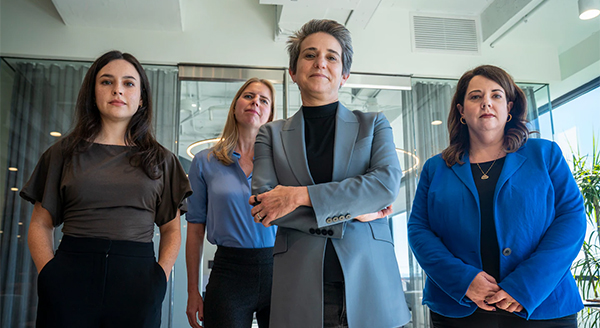
In the early 2000s, the Report went online and became available to a much wider audience (including us) at $350/year. By then, it began to rate every Senate and House race as "solid," "likely," or "lean" one way or the other, or else "toss-up." The ratings were ultimately subjective, using polls, fundraising, candidate analysis, review of the campaigns, and anything else that seemed relevant. Cook added employees and they became more specialized. For example, the 28-year-old Erin Covey handles just the House races and spends half an hour every day watching campaign ads. There are now nine full-time employees, eight of them female. Cook himself is retired and Amy Walter is now the CEO. Here is a photo of Covey, managing editor Carrie Dann, Publisher Amy Walter, and Senate-and-governor editor Jessica Taylor.
By October, the ratings take on a nearly mythical status, and become one of the last bastions of political wonkery in the capital that everyone trusts. When an editor wants to change a rating, the whole team gets together to discuss it. Ratings are not changed lightly. There has to be a new and important development to warrant it. It could be a poll, a fundraising report, a gaffe in a speech, or even a campaign ad (Vivek Ramaswamy's now-infamous ad led to change from "toss-up" to "lean Democratic," not because it is despicable, but because the Cook staff thinks it will cost Ramaswamy a lot of votes from women).
When the Report changes a rating, they hear from the affected candidate instantly. It doesn't matter if it is an upgrade or a downgrade. They always hear about it. Of course, they are happy to take the call because it means talking to the candidate and getting more information about how things are going. Candidates don't like being "likely" or "solid" because that chokes off fundraising. Covey said that campaigns have hidden positive internal polls from her for fear she would upgrade them. The ideal rating for a candidate is "toss-up," so the candidate can beg his or her supporters for more money.
Some people are now thinking that prediction markets are the future of, well, prediction. Charlie Cook pooh-poohs this, saying: "I don't care about some 19-year-old guy sitting in his parents' basement in his boxer shorts betting 10 bucks on Kalshi. I want expertise."
In the end, what keeps the myth going is the results. An analysis of 10,374 races rated from 1984 to 2024 found that 97% of the "likely" candidates won and 94% of the "lean" candidates won. Toss-up races were roughly split 50-50. That record is tough to beat. (V)