Forewarned is Forearmed, Part I: Nine Ways Trump Might Try to Interfere with the Elections
(V) just bought a new computer monitor, so he could see the elections more clearly. He then put the old one up for
sale on a local website for used products. As fate with have it, the first person to respond to the ad was a young woman
refugee from Belarus, a country that has long history of elections
rigged
by an authoritarian. Was fate sending (V) a message? Who knows? But either way, this item seems appropriate today.
Before we proceed, let us remind readers that we wrote a rather
scathing piece
about J. Michael Luttig and others who outline wild scenarios where, somehow, Republicans are able to complete subvert
democracy and the Constitution, and Democrats and the courts are somehow unwilling and/or unable do anything about it.
This kind of fearmongering election-process porn, involving wildly implausible scenarios, is not helpful.
By contrast, there are real things that Donald Trump and his fellow MAGA Republicans could plausibly try to do, or
are already trying to do. Those are worth a mention. While Trump has not gone full Lukashenko yet, in part because
judges in the U.S. have a lot more backbone than senators in the U.S. (see tomorrow for more), Trump doesn't take to
losing like a good sport. It is widely expected that he will try to cheat every way he can before, during, and after the
midterms and then pray to the ghost of Uncle Scrooge that some of them work. Most news agencies are probably aware of
this, but few dare report on it for fear he [Trump, not Scrooge] will sue them or nix their next business deal. One
exception is Reuters, which sent some of its 2,500 reporters to interview over 50 election officials, voting experts,
and election lawyers across the U.S. to get their takes on what Trump might try to do. The reporters also combed over
Trump's statements, court filings, and actions by federal agencies.
Reuters, which was founded in London by a German-born Brit, Paul Reuter, got its start as a news agency in the 1850s
by using homing pigeons to transmit financial information from Aachen, Germany, to Brussels (due to a gap in the
telegraph system). The company is now part of a multinational financial news company,
Thomson Reuters,
headquartered in Toronto. So, it is rather less in reach for the U.S. government than most media companies. Below is a brief summary of Reuters'
long report
on what its reporters turned up:
- Alleging Election Fraud: Trump has a long history of claiming that illegal immigrants
voted in elections, despite massive evidence that voting by non-citizens is exceedingly rare and the few cases that have
been turned up are generally long-time green card holders who thought that having permanent resident status gave them
the right to vote. And in some jurisdictions, they indeed do have the right to vote in local (but not federal)
elections. This is because the states, not the federal government, run elections and federal law bans non-citizens from
voting only in federal elections. Nevertheless, Trump is likely to lie that millions of illegal immigrants
voted—but only in elections Republicans lost. He never claims illegal immigrants voted in elections
Republicans won. Odd.
He may also claim voting machines have been hacked. That is nonsense. Over
98% of votes
are actually cast on paper ballots. Some states use machines for people to make their choices (which often help blind or
illiterate voters by reading the ballot out loud, possibly in multiple languages), but virtually all of these machines
print out a paper ballot in the end for the voter to visually verify. For example:
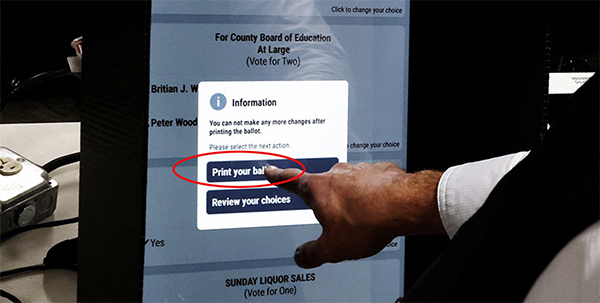
These paper ballots are then deposited in the ballot box or scanned, leaving a paper trail that can be used for
recounts. If a machine were hacked to change votes, the voter could see that and report it. Also, the machines are
generally not connected to the Internet so a hacker would need physical access to the machine to hack it. A hacker
sitting in an office in St. Petersburg couldn't do it.
- Pressuring Election Officials: In 2020, Trump famously called Georgia Secretary of State
Brad Raffensperger (R) and asked him to "find" 11,780 new votes for him. Raffensperger refused to even take the call on
Trump's first 17 attempts. Then, on the 18th occasion, he took it on speakerphone with multiple witnesses in his office. In
2020, Trump also tried to pressure election officials and lawmakers in Arizona, Michigan and Pennsylvania. This time,
Trump may try to pressure other election officials to change the results, hoping to find some who don't have the spine
Raffensperger has. Unfortunately for Trump,
22 states
have a Democratic secretary of state, including the key states of Michigan, Minnesota, Nevada and North Carolina. But
even the Republican secretaries are surely keenly aware of what Raffensperger did and his subsequent status as a
democracy hero, as well as the consequences of getting caught changing election results. Nevertheless, some of the
secretaries are election-denying Trump allies, so you can't know for sure what could happen there.
- Seizing Ballots: Trump might try to seize voting machines, ballots, or other
election-related material. If he failed to get a warrant from a judge, most election officials would refuse. If he got a
warrant, red states would probably comply and blue states migh sue. Once he got actual ballots, the chain of custody
would be broken and no one could later tell if a henchman or henchwoman went through all the ballots and shredded those
for a Democrat Trump wanted to lose. It might be possible to get a magistrate judge to sign a warrant, since magistrate
judges are not Art. III judges confirmed by the Senate, but are employees of the Executive Branch.
- Sending "Monitors" to the Polls: The DoJ is planning to send 1,000 federal monitors to
"assist" at the midterms. According to Assistant AG Harmeet Dhillon, their goal is to make sure "nothing funky" is
happening at the polls. For example, Black people getting uppity and voting. In the past, monitors were legitimately
sent to monitor federal civil rights laws and make sure states complied with them. This year, there is no obvious need
to have federal monitors since by now the states have come to accept the civil rights laws.
- Sending in ICEmen: Sending federal agents, other than monitors, into polling places is
illegal and Trump probably won't try that, since many states are aware of this and have a plan to deal with it. However,
Trump could station armed ICE agents in full uniform outside selected polling places in an attempt to scare Latinos and
others who fail the "white skin test" from voting:
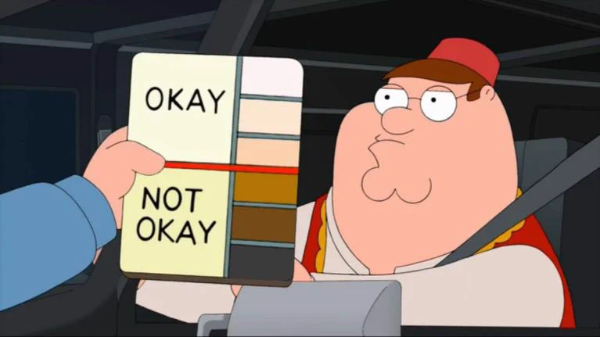
- Deploying Troops: At the extreme end, if Trump is really desperate, he might invoke the
Insurrection Act of 1807
to order the Army to guard polling place, for example, to safeguard them by not letting anyone enter. This would trigger
instant real-time responses, with Democrats asking judges to immediately rule that there was no emergency and so make the
deployment illegal. If this were to happen, lawyers at the polling places could inform the individual soldiers that
obeying an illegal order was a violation of the UCMJ and could result in their being court martialed. State and local
police could also "encourage" individual soldiers to move far from the polling places, lest they also be arrested for
violating state laws. Obviously, this could get messy.
- Declaring an Emergency: Trump could sign an XO declaring an election emergency. He has no
authority to do so and nothing in the Constitution or federal law would turn over election administration to the federal
government even if there were a valid emergency, which this would not be. But Trump has a long history of trying things
that are patently illegal and hoping he can get away with it. The goal here would be more to create chaos and confusion
and provide a backstory for later saying the election results can't be trusted.
- Charging Election Officials: Trump could announce, in advance, that election officials
who allow non-citizens to vote could be charged with a federal crime. At the very least, he (or Stephen Miller) could
suggest or imply that before allowing someone to get a ballot, the official should check to see if the voter is white.
This could make poll workers and other officials afraid and make them double-check all voting credentials (e.g., voter
IDs) and have the side effect of gumming up the works, slowing down processing, and creating long lines that might make
some voters give up and go home.
Most states are pretty careful about how elections are held. Even red states, or maybe especially red states, DO NOT
LIKE the feds interfering in their affairs, like elections. States have detailed protocols for securing elections. For
example, 47 states test every single voting machine in advance of them being brought out, and then have them sealed and
locked away securely until they are used. They are carefully tracked when they are moved, especially after an election
to maintain a secure chain of custody.
Even mail-in ballots have multiple layers of security. The include a signature requirement on the envelope, video
cameras pointed at drop boxes 24/7, requirements of bipartisan teams to collect and transport ballots, and more. Many
states inform voters by e-mail on the day their ballot has been sent and again when it has been received or when it has
been scanned. If there is a problem, some states offer a way to "cure" the ballot.
In short, although Trump is likely to try one (or maybe all) of the above, states do tend to guard their rights
carefully and most are likely to fight any kind of federal takeover. And the ones they submit without a fight are states
where no Democrat could be elected deputy assistant dogcatcher, so there is no need to rig those elections. Also, unlike
previous years, this time everyone is super alert to attempts to mess with elections, so there is no element of
surprise, something often the key to a good attack. In the items we're running tomorrow, we'll have additional
information about efforts to resist any stunts Trump & Co. might try. (V)
This item appeared on www.electoral-vote.com. Read it Monday through Friday for political and election news,
Saturday for answers to reader's questions, and Sunday for letters from readers.
www.electoral-vote.com
State polls
All Senate candidates


