
Dem
47

GOP
53

Here is the question we put before readers many weeks ago:
J.H. in Portland, OR, asks: We've seen how many of the Electoral-Vote.com faithful are connected to the computer sciences and now I'm wondering how many are involved with ham radio. I ask this because I wonder if there is a correlation between technical curiosity and experimentation, and the awareness and interest in political events. Or between other areas of interest and interest in political events.
So, I would like to know: What are Electoral-Vote.com readers' hobbies?
And here is the final group of answers, covering hobbies we could not quite categorize:
S.K. in Bethesda, MD: You said the last entry in this series would be focused on less easily categorized hobbies.
Well, in addition to cycling, baseball, puzzles and unhealthily voracious reading regarding current events with a focus on politics, I have watched every movie that has won the Oscar for Best Picture since they began awarding them (Wings in 1927) and every nominee since 1989. As has been discussed here multiple times in the past, the winners are not always (arguably not usually) the actual best movie in any given year. But these days the ten nominees usually capture most of the best movies—at least, the best American movies (and they've done better recently at including the very best foreign films).
I can usually identify most of the likely nominees with a fair amount of confidence by early December (even though many won't have come out yet, most of them will have appeared at festivals and will have buzz) and most of the time I can guess the winner, though there are always surprises. I would work my way back to watch all of the nominees in history, but the fact is there are just too many flat-out bad movies that have been nominated and it's not worth the effort.
I enjoy looking for common or contrasting themes and styles. This year's likely nominees have two dominant themes: (1) Both sides of the political divide are toxic and destructive and the future belongs to a different path (Sinners, One Battle After Another, Bugonia, even Wicked, if it makes it in) and (2) Difficult or Struggling Fathers (Sentimental Value, Frankenstein, Hamnet, One Battle After Another, and yes, arguably Wicked). They have other themes as well, of course, but I enjoy finding the connective tissue and wondering what it says about where we are as a culture. Apparently we're fed up with political extremists of all types and we're still trying to understand our fathers (this is not a new theme!).
S.E. in Haiku, HI: When we moved to Hawaii 10 years ago, I discovered, among the many tropical fruit trees, about 5 cacao trees. When they started dropping their fruit on the ground I decided I had to find something to do with them. Thus began a 10-year pursuit in growing cacao and making chocolate. Making chocolate is a long and involved process that is too complicated to explain here. But the rewards—if done right—are obvious. This "hobby" (I am planting more trees on our 2 acres; who knows, maybe it will become a late-life career some day) is quite common in Hawaii, as the tree only grows in latitudes between 20 degrees north and 20 degrees south, making Hawaii the only state where cacao grows. Next time you are in a specialty grocery store, or in Hawaii, seek out some 100% pure Hawaii-grown chocolate. You won't be disappointed.
J.L. in Los Angeles, CA: My hobby is something that might be of interest to those among our readers who like to go where no one has gone before: Star Trek fan films. About 10 years ago, realizing that a constant stream of fan-produced films in the Star Trek genre (dating back literally to the 1960s!) was showing no signs of slowing down, Paramount and CBS decided to allow fans to create these labors of love as long as they followed certain guidelines (Note: People outside of the U.S. won't always be able to access this webpage). Around that same time, I began reporting on these amateur productions, launching a blog called Fan Film Factor, interviewing the fan creators, tracing the history of long-running fan series, covering fan film news, writing editorials, and even launching an annual fan film contest called the Showrunner Awards.
You might be surprised by how professional the quality of some of these productions are! In fact, I wrote and produced a Star Trek fan film of my own, Interlude, raising $25K in crowd-funding and assembling a cast and crew of more than 50 people (including an Atlanta-based actor who appeared on three episodes of The Walking Dead!). A few years later, I wrote and produced an animated fan film titled An Absent Friend, using AI to recreate the voices of the late actors Leonard Nimoy (don't worry, I consulted with the Nimoy estate) and DeForest Kelley.
Most recently, I helped edit two excellent fan films: Second Star to the Left (featuring a remarkable young woman in the leading role who is neurodivergent) and Farragut 2024 (with impeccable Trek movie-era uniforms and sets). I could go on and on, as Star Trek fan films run the gamut from shot-on-a-cell-phone-in-the-bedroom to a fan series called Star Trek Continues that looks almost identical to the original 1960s series but with different actors. But really, if you're interested in learning more, just boldly click over to my blog and prepare to be stunned!
M.D.K. in Portland, OR: I retired from Family Medicine during the pandemic. But now I use those skills (science, clear communication, humor) to teach Disaster Sanitation around the Pacific Northwest, from the Bay Area to Seattle. My class is titled "You Survive the Earthquake But Die of Dysentery."
It's funny, but unfortunately true that in major disasters more people die or get sick due to hygiene failure than from the original catastrophe. With increasingly frequent climate-related disasters, there are so many requests for the class that this summer I led an advanced workshop on how to teach it. I also do a lot of practical engineering of substitute sanitation equipment—mostly made from buckets—that can be deployed when water and sewers fail us.
I post the slides on my website, with ongoing research and discussion. Like medicine, there's also something new to learn in this weird but urgent field.
B.Z. in Atascocita, TX: This may sound a little weird, but I consider my retirement gig of teaching firefighter skills to industrial firefighters my one and only hobby. Let me explain.
I have been in the fire service, mostly as a volunteer, for over 60 years, starting as a junior fireman at the age of 13 with a small volunteer fire department in the resort town of Watch Hill, RI (I am 74 now). I'm certain many of your readers are firefighters as well, paid and volunteer, and can probably remember that point in time when they also "caught the bug" and decided that, yeah, this is really cool, and I'm going to do this for a long time. Over the years I volunteered for four different municipal departments in Rhode Island and Texas, wherever I happened to be living at the time, and held every position possible, including twelve years as a Chief Officer.
In 1988 I went to work as an operator at a chemical plant outside of Houston that is owned by a major oil company, and joined the plant's volunteer fire brigade as soon as possible, and thus learned how to be an industrial firefighter. (Yes, there are many differences between municipal and industrial firefighting.) My petrochemical career ended after 23 years, with my final four years being appointed the plant's Emergency Preparedness Coordinator, which put me in charge of the emergency response teams, i.e., fire, rescue, EMS, and hazmat. This was the plant's only full-time paid position in emergency response, and it gave me many opportunities to teach firefighting techniques to my teams.
Texas A&M University, in College Station, TX, is about 100 miles from Houston, and is home to the Emergency Services Training Institute (ESTI), which is the pre-eminent training facility for firefighters in the world, bar none. ESTI trains fire personnel from all over the world, and the industrial section, for the most part, services the petrochemical industry. In 2012, six months after my retirement, I started working part-time as an instructor at this fabulous facility, and continue to do so to this day.
I absolutely love what I do. Having been in the fire service for most of my life, it would be very difficult to give it up. I like to tell folks that I'm too old to fight fires, but not too old to teach, and this is true. I have a 52-year-old teaching degree from the University of Rhode Island, but never got to use it until I retired from industry. I love passing along my knowledge and years of experience to young men and women just starting out in the fire service.
One highlight of my retirement gig was the opportunity to go overseas to teach some industrial firefighting classes for two and a half weeks at a training facility in Qatar, along with two other instructors.
This is my hobby. This is what I do. I love to read. I love to go hiking and snow skiing in the mountains of Colorado. But being on the training field with a team of firefighters, lighting off a big prop, feeling the heat from the fire, and seeing them successfully bring it under control, nobody gets hurt, yeah, that gets the heart pumping and the juices flowing.
This is not work. This is my hobby.
S.N. in Sparks, NV: My hobby is conducting research on coaches in professional baseball. Players get most of the attention for their success and rightly so. But the coaches also play a role in players' success and deserve recognition for their efforts. I publish the results of my research in the Baseball Reference Bullpen. As a former academic librarian, I enjoy doing the research and sharing the results with other baseball fans. Here is an example of a recent entry.
G.L. in Memphis, TN: Once I had children, I challenged myself to do something which had scared me out of my shoes as a younger person: rollerskating. And then I met our local coach (she turned professional in 1947 at age 17), who introduced me to skate dance. She is still my coach, and one of my daughters is my partner. And what other sport lets a 75-year-old put on a velour suit, a white paisley shirt, and a red bowtie to show off in front of a crowd? Awesome.
A.T. in Cerritos, CA: I used to belong to a medieval re-creation group called the Society for Creative Anachronism, which is not one hobby, it's a bunch of hobbies wrapped in a lifestyle that's become a subculture. Some of the activities I pursued as part of my participation were: medieval music (singing, tin whistle and guitar), archery, calligraphy, costuming, chainmail making, sword fighting and puppetry. A few of these I still do.
C.P.S in San Jose, CA: I am a professional software developer whose principal hobbies (apart from politics) are travel and photography. I have traveled pretty extensively, now having visited 189 out of the 193 U.N. countries (still remaining: Libya, Eritrea, Bhutan and Mongolia). Estimates that I have seen suggest that the number of people who have visited "all of the countries in the world" is somewhere between 500 and 1,000. Of course, so far that doesn't include me.
As my work can be performed remotely, since 2013 I have been basically moving to a new country about every 3 months. My main strategy is Europe in the summer and some place warmer in the winter.
One of my "unusual" travel interests is to visit places where something newsworthy (usually disasters) has taken place. Along these lines, I have visited Chernobyl; Jonestown, Guyana; the site of the Charge of the Light Brigade; the street corner where Archduke Franz Ferdinand of Austria was assassinated, sparking the First World War; the Bay of Pigs; the Al Shifa pharmaceutical factory that Bill Clinton tomahawked in retaliation for the Al Qaeda attacks on the U.S. embassies in Nairobi and Dar Es Salaam; and a few others. To blend in my photography, I have a website that highlights some of these trips (including the Obama and Malala Nobel Peace Prize ceremonies, which I attended):
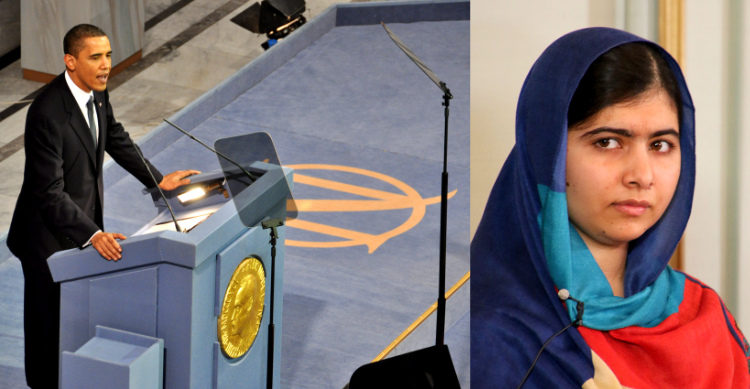
The two most important lessons that I have learned from my travels is that people are mostly the same everywhere in the world (including in sh**hole countries). There are both good and bad people as well as everything in between, with way more good than bad. On balance, my interactions with people have been overwhelmingly positive. I was in the military during the Vietnam War, and despite the fact that I could have been (but wasn't) in Vietnam at the time killing the fathers and grandfathers of the young people living there now, I never had a moment of hostility on any of my trips to that nation. I have friends in almost every corner of the world now.
The other critical lesson is that the advantages that I received, simply by birth as a white male child in a stable family that valued education, are so great by comparison to literally billions of people in the developing world that if I were ever to complain about any of my "problems," it would almost be a crime against humanity. It breaks my heart to watch the consequences of the shutdown of USAID, where for such a small investment we can have such a large positive impact on the lives of some of the world's poorest citizens.
S.H. in Lake Helen, FL: DREAMWORK!
This may be an unusual hobby, since most people dismiss dreams as being trivial, but for 25 years I have been massively interested in dreamwork and continue to read and apply different outlooks and approaches. Since retiring I have been keeping an extensive online journal of each dream (the goal is to enter decades of past dreams, too) including categorizing personal symbols and creating different spreadsheets to see how my dream symbols align with other current interests, for example, alchemy and Taoist concepts.
I find every dream to be a best friend informing me, on multiple levels, about myself and my well-being, about others, as well as relaying greater truths about life. Dreams constantly point me in new directions, often to the religions, mythologies and cosmologies of different cultures. And I have dreamed of political figures, too. My reading materials all stem from dreamwork.
While dreams entertain and instruct me, most importantly they prompt me to be more open-minded, to view things from different angles, to realize that every dream symbol, likewise, has multiple meanings to ponder, not just one. Dreams introduce me to my unconscious, and I am constantly evolving to become a better person because of them. While dreams can be challenging to understand, the fruits of continued contemplation produce rich rewards in self-development, in relating to others and toward understanding people's behavior and actions.
P.W. in Springwater, NY: I'm recently retired and find myself doing many things you might consider as a hobby, but I find most of my time and energy relates to dogs. Maybe because I wanted a dog as a kid, but couldn't convince my parents until I was a junior in high school. Anyhow, soon after I had my own place, there was a dog in my life. Currently there are four. I do agility with two of them, rally with two—not for competition, just for fun (and exercise). One of them will take her "therapy dog" test today. The fourth one isn't really mine—I raise puppies for a local guide dog organization so will only have her with us for a few months before she's hopefully off to bigger things. She's the 14th pup I've raised for them; several didn't choose "guide dog" as a "career," so came back to us, including the soon to be therapy dog who also loves agility! And now... it's time to take the dogs out.
O.R. in Milan, Italy: I have only one hobby: "learning stuff."
My last job was office-based and involved researching and fact-checking. The topics were wide-ranging, mainly STEM, with input coming from various countries, very varied and, to me, fascinating.
When, after retiring, I was gifted some sheep and goats, I knew nothing about ruminants. I had to learn about their anatomy and ethology, the electrification of fences, pasture management, etc. While I knew the names of the plants that were poisonous, I was however unable to recognize them (or much of anything else botanical, for that matter). So I grabbed my camera and took pictures to learn what was growing in the area, originally with the sole aim to be able to assess the danger. Of course it didn't stop there. This led me to learn more about photography and optics in general (and to the purchase of more cameras and lenses). I retrieved my old microscope to examine plant parts and animal feces checking for parasites (which also involved learning about reagents and what the larval stages of the various likely parasites looked like).
By photographing "stuff" in my neck of the woods, the interdependence between flora and fauna became apparent, as were the changes brought about by the warming of the climate, and so I decided to re-wild the property. A great many books were read. The tractor stays idle most of the year now, but I keep it in good working order nonetheless. The next step is maintaining year-round watering spots for wild animals, including creating appropriate breeding opportunities for rare species of dragonflies and amphibians. My next hands-on project will be learning how to weld.
The only topic of which I will consume very small amounts only—because it invariably tends to raise my stress levels to unhealthy heights—is Italian politics.
T.S. in Bainbridge Island, WA: After retiring from 35 years of clinical medicine earlier this year, I apprenticed myself to the craftsmen working on renovating our teak-built sailboat. I told them, "Give me the worst jobs, the ones you would give an intern." Here I am in hazmat gear getting ready to remove a fiberglass encased ice box:
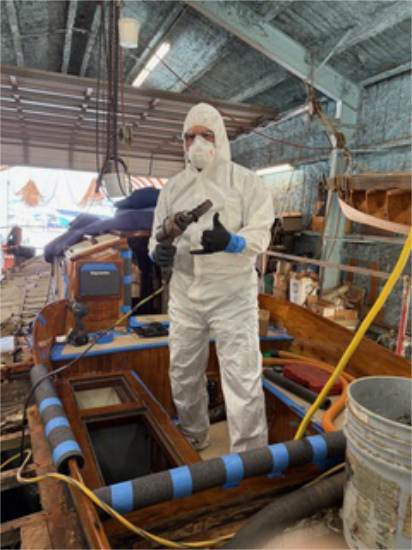
For anyone getting ready to retire, I highly recommend finding a project that involves meaningful physical work.
Other hobbies include playing guitar, trying to learn French, being a sounding board for my wife's writing projects, cycling and hikes with our dogs.
Q.F. in Seattle, WA: I restore pinball machines, anything from the 1980s onward. I keep a few to play, but the appeal is twofold—after working on computers all day, it's a tactile hobby, and I love bringing things back to life.
S.W. in Wimberley, TX: Korean drama (though not Squid Game). I've gone so far as to own a t-shirt that proclaims: "The only drama I want is Korean with English Subtitles."
Here is the question for next week:
S.H. in Duluth, MN, asks: I've finally reached a point in life where I have enough disposable income to get an actual subscription to any one news outlet of my choice. However, with a good number to choose from, and my own lack of knowledge on the subject, I'm not exactly sure which one might be optimal. Do you have any thoughts on which one I might want to go with, accounting for things like cost, content, who owns the paper, bias, etc.? Even just a few ideas would be great!
Submit your answers to comments@electoral-vote.com, preferably with subject line "News, Worthy"!