
Dem
47

GOP
53

We thought we would try out a little thought exercise. Let us imagine a world where redistricting turns into a true arms race, and EVERY blue state decides to do whatever it can to maximize the number of Democrats it sends to the House. We reached out to reader and redistricting-website-guru A.B. in Wendell, NC, who did yeowomanlike work in helping us to visualize a strongly blue-gerrymandered world.
We are going to start with states that already have a Democratic trifecta. Note that we are assuming that, for purposes of our thought exercise, if there are any laws or other barriers in the way of a gerrymander, those laws/barriers will be set aside, like what just happened in California. At worst, there might be some delay to allow for an initiative to be put before the voters to remove the barrier. We are also assuming a target date of 2028, since many states would not be able to get new maps in place by 2026.
Here is the rundown of Democratic-trifecta states that could potentially become more blue-gerrymandered (excluded are the Democratic-trifecta states of Connecticut, Delaware, Hawaii, Maine, Massachusetts, New Mexico and Rhode Island, which already have 100% Democratic delegations). Click on the state name if you would like to see/tinker around with the map that A.B. came up with (and, in particular, to create some "Goofy kicking Donald Duck" districts, which A.B. avoided doing):
|
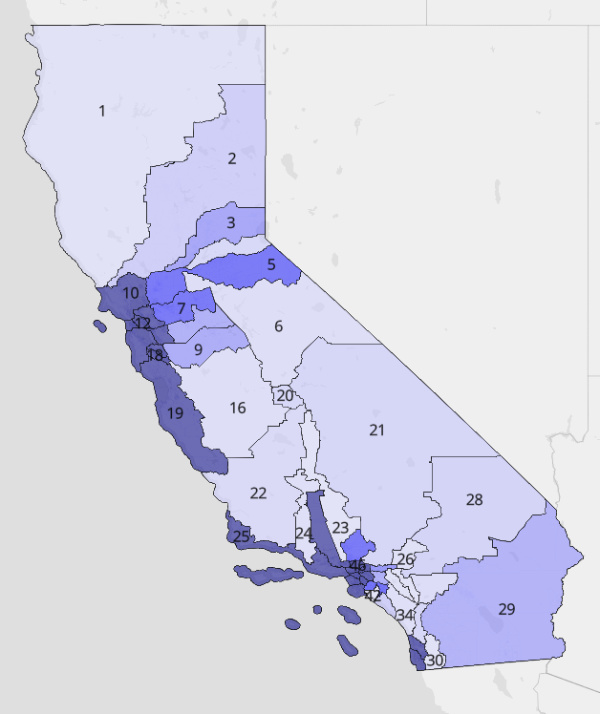
State: California Current delegation: 43D, 9R Gerrymandered delegation: 52D Net gain: +9D Riskiest gerrymandered district(s): CA-01 and CA-23, both 49.7% Democratic, 49.6% Republican |
 |
|
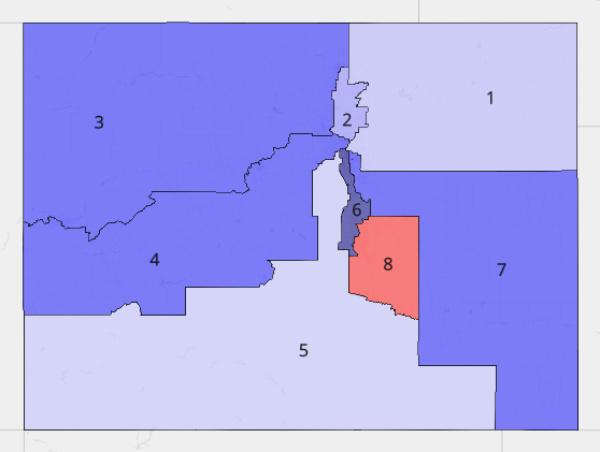
State: Colorado Current delegation: 4D, 4R Gerrymandered delegation: 7D, 1R Net gain: +3D Riskiest gerrymandered district(s): CO-01, 49.6% Democratic, 49.5% Republican |
 |
|
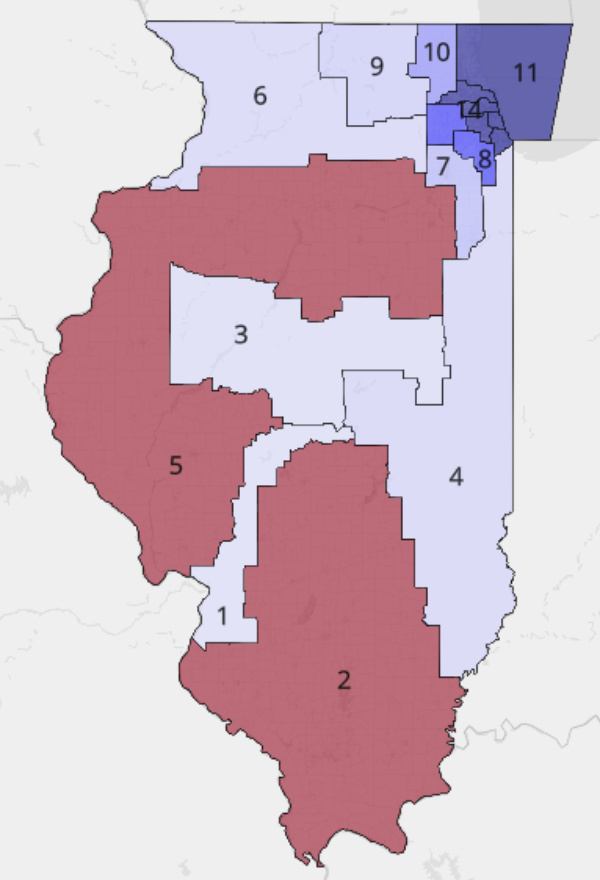
State: Illinois Current delegation: 14D, 3R Gerrymandered delegation: 15D, 2R Net gain: +1D Riskiest gerrymandered district(s): IL-01, 48.8% Democratic, 48.7% Republican; IL-03, 48.7% Democratic, 48.6% Republican |
 |
|
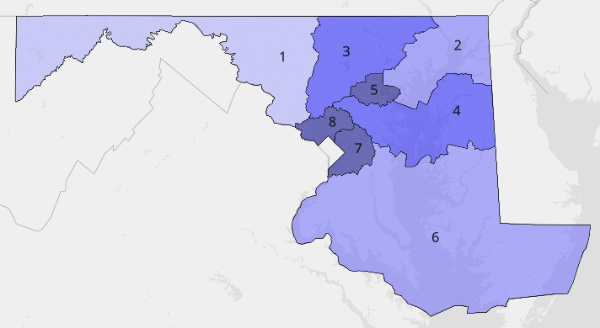
State: Maryland Current delegation: 7D, 1R Gerrymandered delegation: 8D Net gain: +1D Riskiest gerrymandered district(s): MD-01, 50.7% Democratic, 47.2% Republican |
 |
|
State: New Jersey Current delegation: 9D, 3R Gerrymandered delegation: 12D Net gain: +3D Riskiest gerrymandered district(s): NJ-11, 49.7% Democratic, 48.2% Republican |
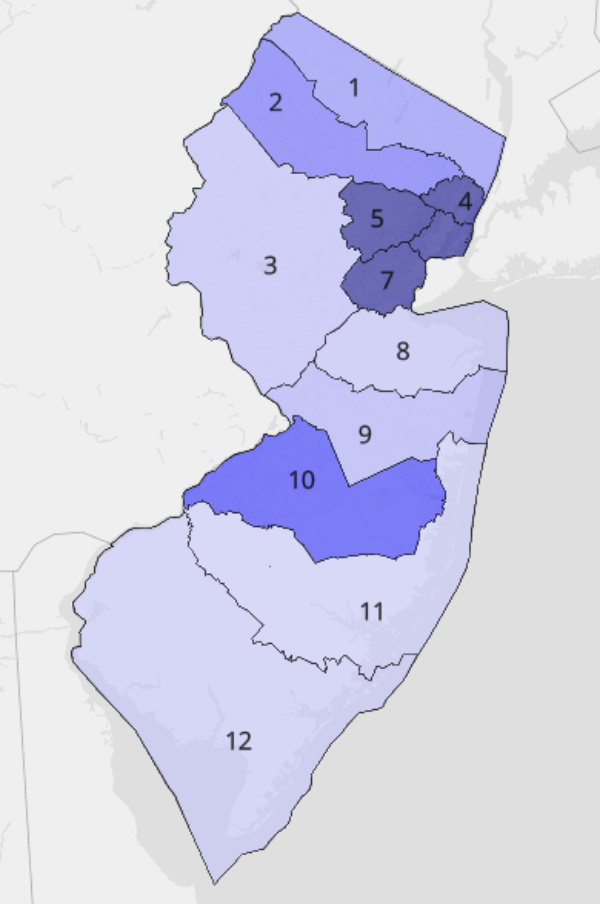 |
|
State: New York Current delegation: 19D, 7R Gerrymandered delegation: 22D, 4R Net gain: +3D Riskiest gerrymandered district(s): NY-08, 49.4% Democratic, 49.2% Republican |
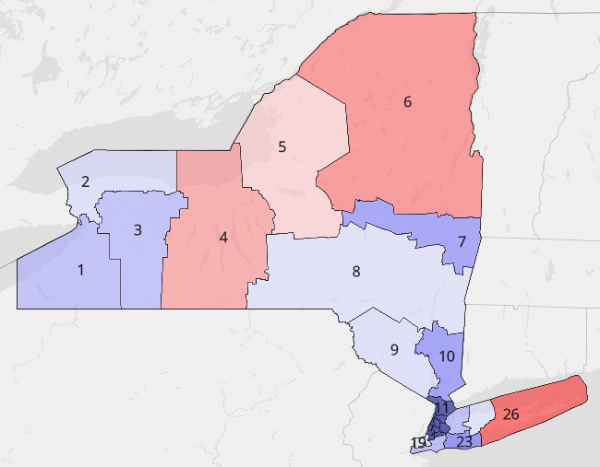 |
|
State: Oregon Current delegation: 5D, 1R Gerrymandered delegation: 6D Net gain: +1D Riskiest gerrymandered district(s): OR-03, 47.5% Democratic, 47.3% Republican |
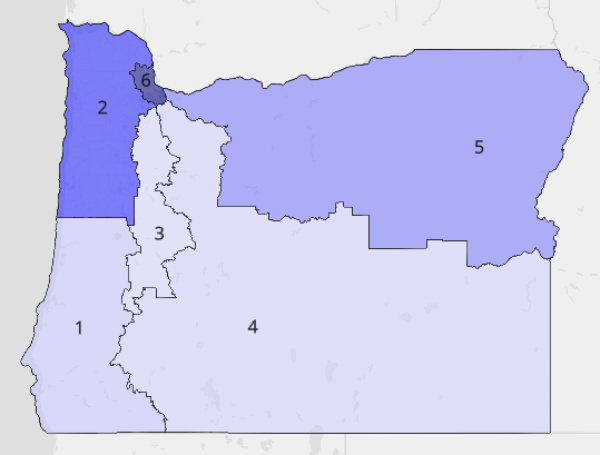 |
|
State: Virginia (as of January 2026) Current delegation: 6D, 5R Gerrymandered delegation: 9D, 2R Net gain: +3D Riskiest gerrymandered district(s): VA-03, 49.6% Democratic, 48.9% Republican |
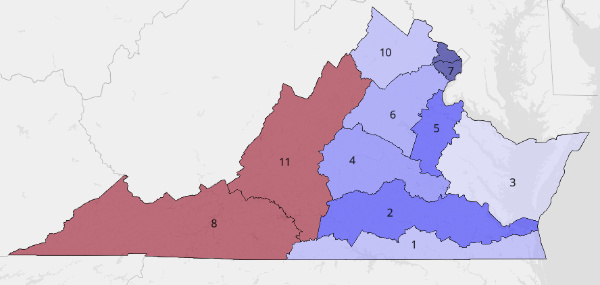 |
|
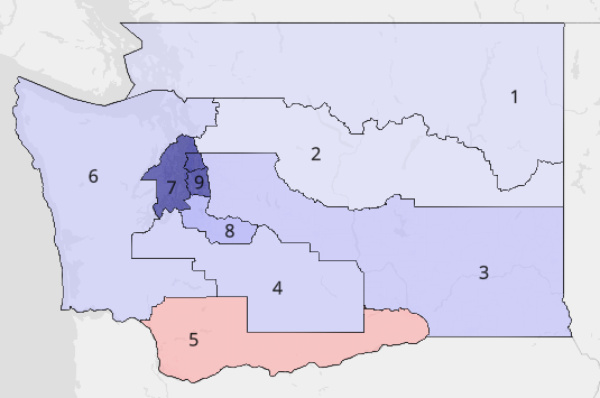
State: Washington Current delegation: 8D, 2R Gerrymandered delegation: 9D, 1R Net gain: +1D Riskiest gerrymandered district(s): WA-02, 49.5% Democratic, 49.4% Republican |
 |
If all of this was to come to pass, then the Democrats could gain a total of 25 seats. That would, of course, come with the risk that even a fairly mild red-ripple year could prove disastrous.
And now, the states where the Democrats might possibly claim a trifecta in the next year (though it would take a blue monsoon, in some cases):
|
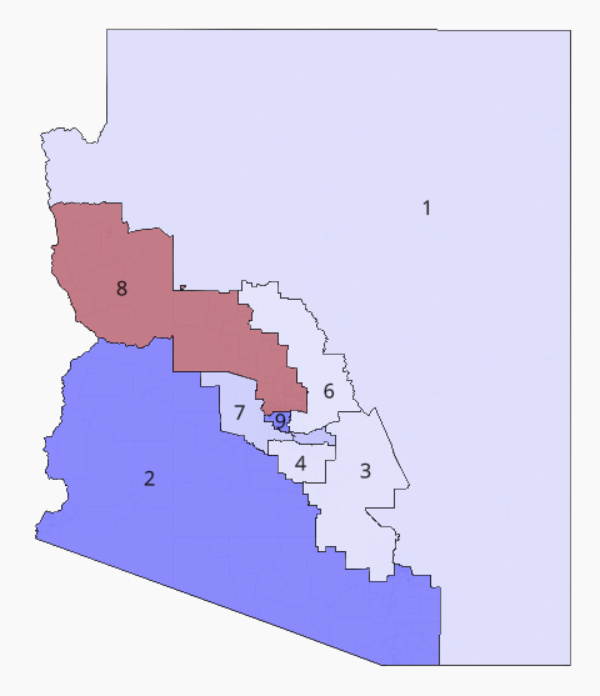
State: Arizona Needed for trifecta: 3 seats in the state Senate (up in 2026), 4 seats in the state House (up in 2026) Current delegation: 3D, 6R Gerrymandered delegation: 8D, 1R Net gain: +5D Riskiest gerrymandered district(s): AZ-03 and AZ-04, both 49.9% Democratic, 48.9% Republican |
 |
|
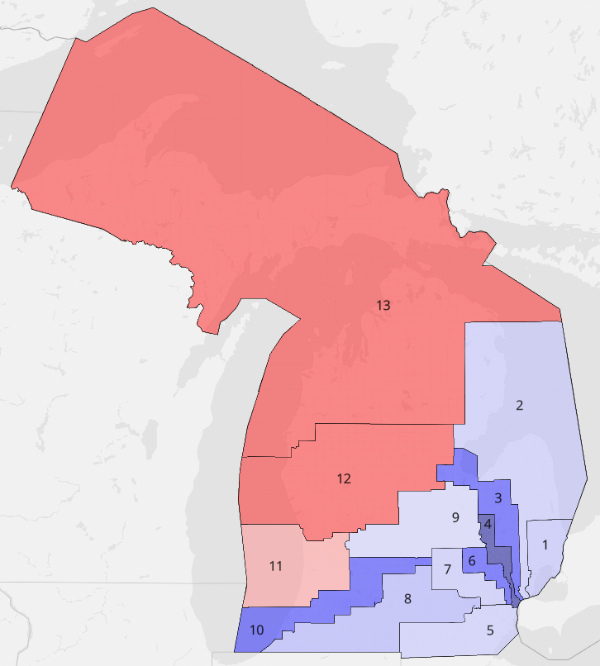
State: Michigan Needed for trifecta: 4 seats in the state House (up in 2026) Current delegation: 6D, 7R Gerrymandered delegation: 10D, 3R Net gain: +4D Riskiest gerrymandered district(s): MI-09, 49.4% Democratic, 47.8% Republican |
 |
|
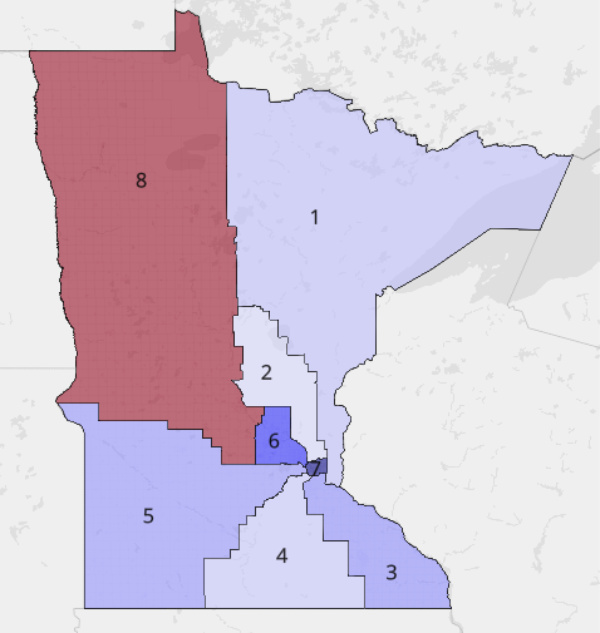
State: Minnesota Needed for trifecta: 2 seats in the state House (up in 2026, including two up in special elections in January) Current delegation: 4D, 4R Gerrymandered delegation: 7D, 1R Net gain: +3D Riskiest gerrymandered district(s): MN-02, 48.5% Democratic, 48.1% Republican |
 |
|
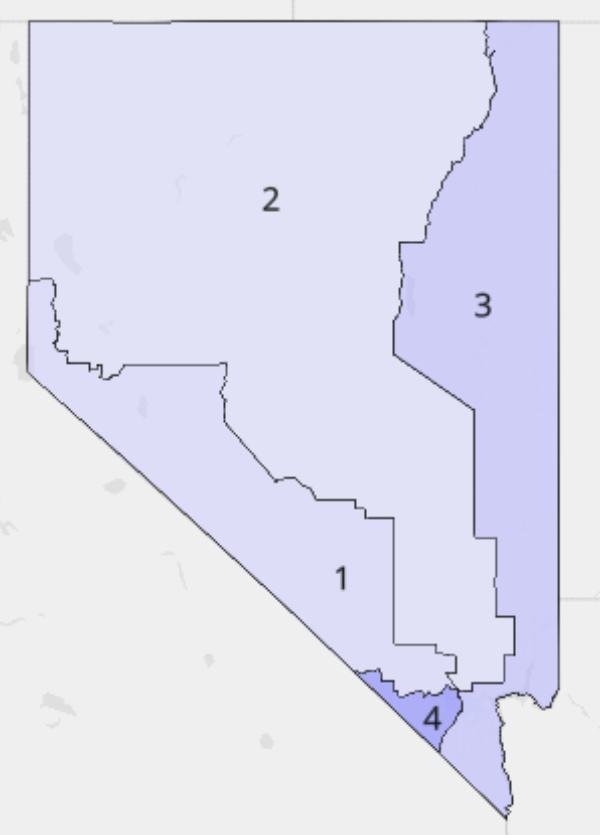
State: Nevada Needed for trifecta: The governorship (up in 2026) Current delegation: 3D, 1R Gerrymandered delegation: 4D Net gain: +1D Riskiest gerrymandered district(s): NV-02, 48.0% Democratic, 47.9% Republican |
 |
|
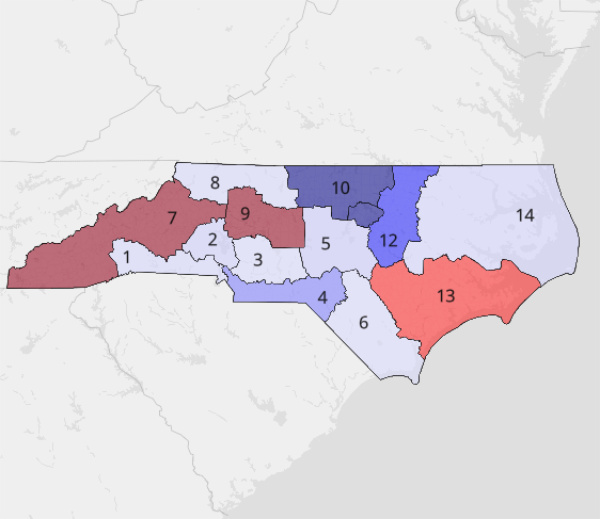
State: North Carolina Needed for trifecta: 6 seats in the state Senate (up in 2026), 12 seats in the state House (up in 2026) Current delegation: 4D, 10R Gerrymandered delegation: 11D, 3R Net gain: +7D Riskiest gerrymandered district(s): NC-03, 48.8% Democratic, 48.8% Republican (but with 1 more Democrat than Republicans; 176,623 to 176,622) |
 |
|
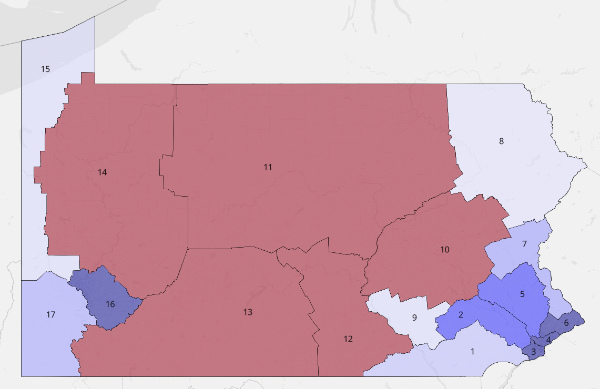
State: Pennsylvania Needed for trifecta: 3 seats in the state Senate (up in 2026) Current delegation: 7D, 10R Gerrymandered delegation: 12D, 5R Net gain: +5D Riskiest gerrymandered district(s): PA-08, 48.9% Democratic, 48.9% Republican (but with 101 more Democrats than Republicans; 163,383 to 163,282) |
 |
|
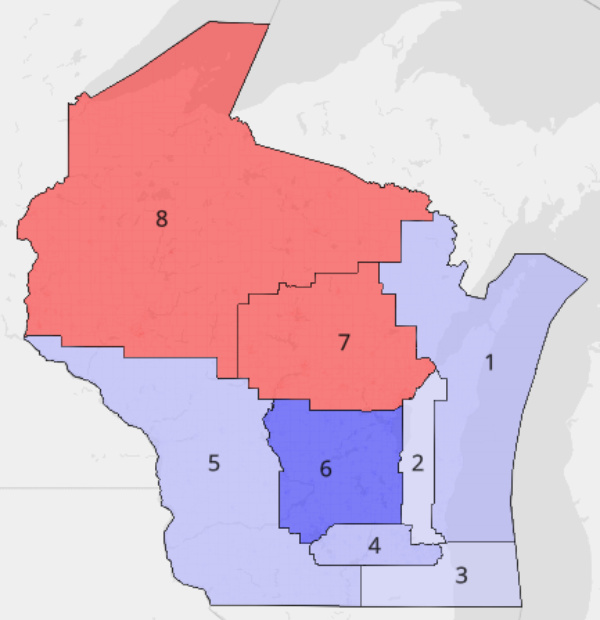
State: Wisconsin Needed for trifecta: 2 seats in the state Senate (up in 2026), 5 seats in the state House (up in 2026) Current delegation: 2D, 6R Gerrymandered delegation: 6D, 2R Net gain: +4D Riskiest gerrymandered district(s): WI-02, 50.2% Democratic, 48.9% Republican |
 |
If all these changes were to come to pass (not bloody likely), that would be +29 seats for the Democrats.
From this exercise, we would make five observations:
Not all of these states will indulge in gerrymandering shenanigans, though some of them will, either in the immediate future, or before the 2028 election. And, ironic as it is, supporters of democracy should be rooting for as aggressive an arms race as is possible, as that is the only thing that will give Congress the political capital necessary to enact gerrymandering legislation at the national level. (Z)